The Windows That Made Twin Peaks a Landmark
In 1972 two lesbians took the paper off the glass. The city later made covering it again illegal.
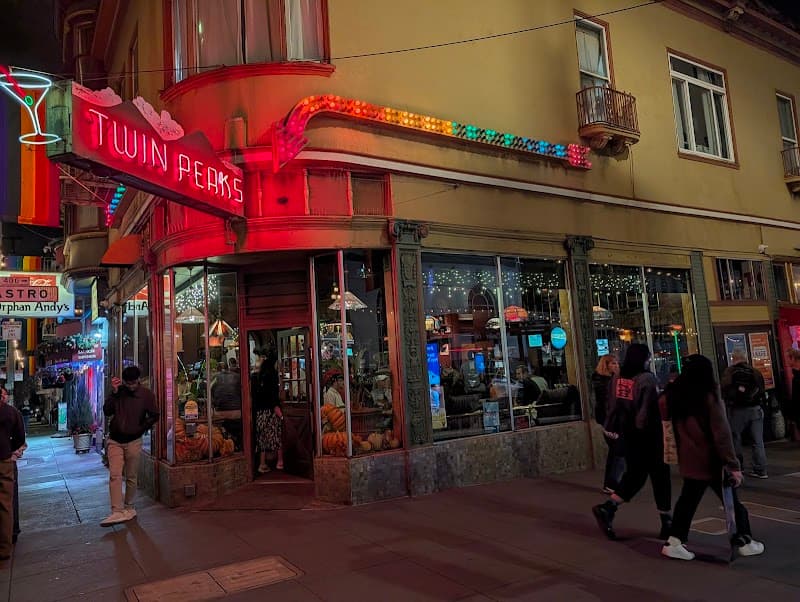
Twin Peaks Tavern sits at Castro and Market in a building that has been a saloon in one form or another since the 1890s. The bar itself opened in 1935 as a working-class Irish pub. The story that made it Landmark No. 264 is later.
In 1972, Mary Ellen Cunha and Peggy Forster took over and ran it as a gay bar. They put clear glass in the full-length windows. American gay bars of that era blacked out the windows so that being seen leaving could not cost you a job. Twin Peaks is generally credited as the first to let the street look in. The city landmarked the building in 2013 and wrote the glass into the law: open, unobscured, no decals. Covering the windows again is not allowed.
Inside: a U-shaped wooden bar, a mirrored backbar older than Prohibition, a partial mezzanine, Irish coffees, conversation instead of a sound system. The window seats are the ones people want. The bathroom is small.
Sit at the glass at dusk, when the F-line turns and the theater marquee is doing its work. You are looking at a piece of civil rights history that is also just a bar. Both things are true. Order the Irish coffee. Look out. Let the street look in.